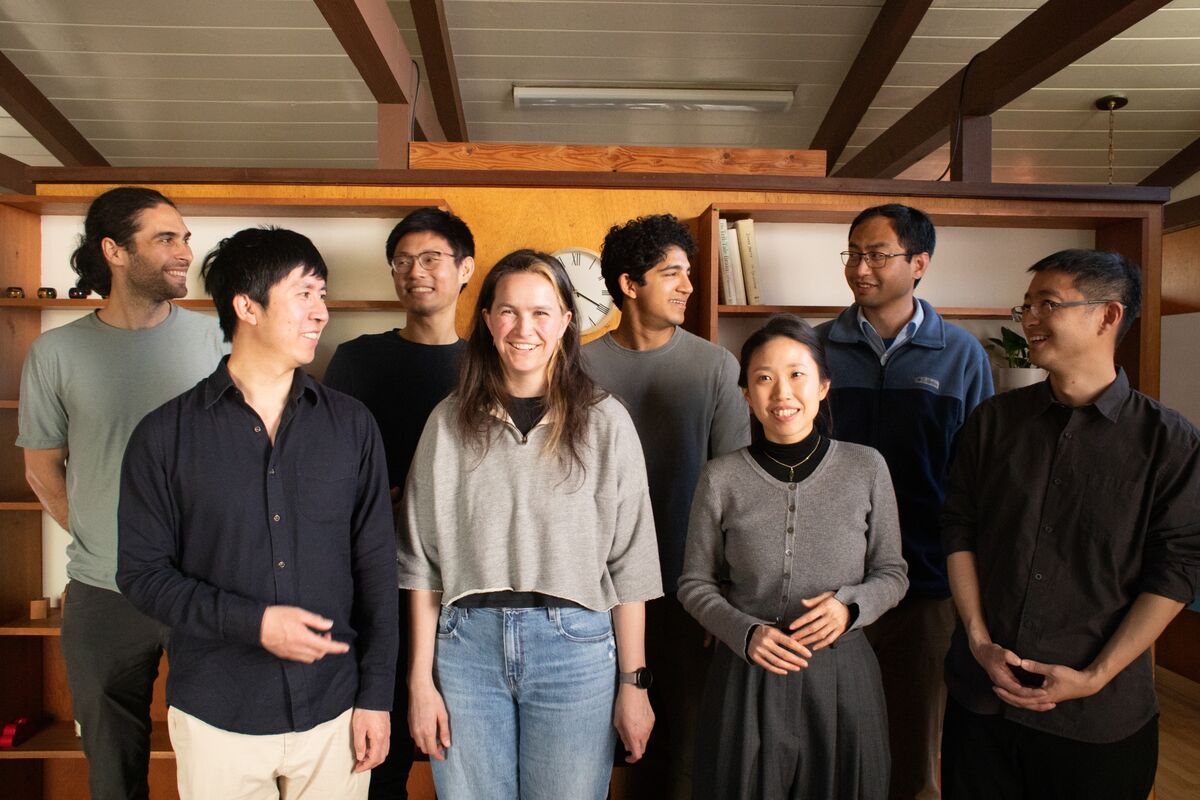
Elorian emerged from stealth on April 9, 2026, securing $55 million in funding at a $300 million valuation to build visual AI models that combine perception with stronger reasoning for robotics and industrial automation.
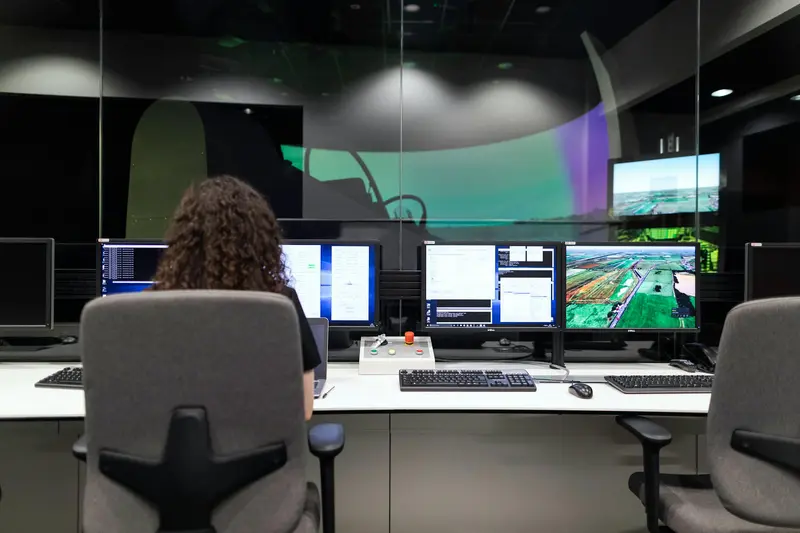
Elorian, a startup building visual AI models engineered for industries where perception and reasoning must work together, emerged from stealth on April 9, 2026 with $55 million in funding at a $300 million post-money valuation, Bloomberg reported. The company targets robotics, manufacturing automation, and adjacent industrial sectors - markets where standard large language models have limited utility and where visual AI has remained an unsolved problem in production environments.
What Elorian Builds
Elorian's core product is a visual AI model that pairs image and scene perception with strong contextual reasoning. Most deployed vision systems today are built to perform reliably on static benchmarks - clean images, predictable environments, well-labeled datasets. Shifting those systems into production in a factory or on a robotic arm exposes their central limitation: they classify what they see, but they do not reason about it.
Elorian claims to close that gap. When a robot encounters an unexpected object on a conveyor belt, a visual AI system with stronger reasoning does not just fail to match a known pattern - it evaluates the context and determines a response. This distinction between pattern-matching and genuine visual reasoning is where the competition in physical AI is sharpest right now, and where Elorian is positioning itself. The underlying hardware demands are substantial - the NVIDIA and Marvell NVLink Fusion chip race is being driven in part by the compute intensity of training and deploying models at this level of perceptual complexity.
The Funding Round
The $55 million raise gives Elorian capital to scale its research team, expand training infrastructure, and establish early commercial relationships before the physical AI space becomes more crowded. The $300 million valuation is notable in a segment that has historically attracted less venture capital than language AI, despite the scale of the industries it addresses.
Language AI has dominated AI investment since 2022. Visual AI for industrial use cases has received significantly less attention, even though robotics, manufacturing, and logistics represent markets that dwarf consumer software. Elorian's round signals that investor interest is shifting. This mirrors the broader expansion in AI investment themes in early 2026, as capital moves beyond text-based model development into physical-world applications that require fundamentally different architectures.
Why the Industrial Market Is Hard
Real industrial environments generate messy, ambiguous, constantly shifting visual data. A model that achieves 97% accuracy on a benchmark dataset may fail unpredictably in production when lighting changes, a new component type enters the workflow, or an operator modifies a process without updating the training set.
Building visual AI that handles these edge cases gracefully - rather than halting, misclassifying, or producing silent errors - is the key challenge Elorian is addressing. It is the same underlying pressure that has driven investment in more reliable AI across all categories in 2026. The focus is no longer purely on capabilities; it is on systems that can be trusted to operate without constant human oversight in high-stakes environments. High-stakes AI deployments across defense and industrial sectors share a common requirement: the system has to work when conditions deviate from training assumptions.
The Competitive Landscape
Physical AI - the catch-all term for AI systems that interact with the material world - has attracted multiple well-funded entrants. Figure, Physical Intelligence, and Apptronik are all building toward deployable robotic intelligence. Google, NVIDIA, and Amazon have made investments in the space. The category is accelerating.
Elorian's stated emphasis is on the reasoning layer upstream of motion planning. Many physical AI startups focus on dexterity and locomotion - getting robots to move correctly. Elorian is focused on getting robots to understand correctly before any motion decision is made. That positioning reflects a real gap in the current market. The AI reasoning capabilities race among frontier labs has established that reasoning quality separates useful AI from impressive demos - and Elorian is applying that same logic to the visual domain. For teams building on top of AI infrastructure, watching how model launches are accelerating across major labs provides useful context for how quickly the competitive floor is rising.
What Comes Next
Elorian did not disclose specific customers, initial deployment partners, or access timelines in connection with the Bloomberg report. The $55 million runway is large enough to sustain multiple years of research and early commercial activity without additional fundraising pressure.
The more immediate question for the market is whether Elorian's visual reasoning approach holds up in production deployments - not in controlled tests, but in real factory and robotics environments with all the noise those settings entail. For anyone tracking the AI tools and infrastructure landscape in 2026, Elorian is a company whose progress over the next 12 to 18 months will be worth watching closely.
Source: Bloomberg via Techmeme

Frequently Asked Questions
What does Elorian build?
Elorian builds visual AI models designed to combine image perception with contextual reasoning. Unlike standard vision systems that classify objects in controlled conditions, Elorian's models are built to reason about what they see - adapting to changing environments in real-time. The company targets industries where that distinction is critical, primarily robotics and AI-intensive industrial applications.
How much funding did Elorian raise and at what valuation?
Elorian raised $55 million and emerged from stealth at a $300 million post-money valuation. The company did not publicly disclose its investors at the time of the Bloomberg report. The round places Elorian among the better-capitalized AI startups focused on physical-world applications rather than the more widely funded language model category.
How is visual AI different from language AI?
Language AI - the category behind ChatGPT, Claude, and Gemini - processes and generates text. Visual AI processes image and video input to make decisions about the physical world. Elorian's specific angle is improving the reasoning layer of visual AI: not just identifying objects in a frame, but understanding context well enough to act on it. For an overview of how AI models are evolving across categories, see Microsoft's recent model launches and the broader competitive picture.
Who are Elorian's main competitors in the visual AI and robotics space?
The physical AI space includes Figure, Physical Intelligence (pi), and Apptronik, all of which focus on robotics and embodied intelligence. NVIDIA, Google, and Amazon have all made investments in physical AI. Elorian's emphasis on the visual reasoning layer - rather than motion planning or mechanical dexterity - is its stated differentiator. The broader AI chip and infrastructure race underpins all of these companies's scaling costs.
Why does visual reasoning matter for robotics?
Robots operating in real environments face constant visual ambiguity - shifting lighting, unexpected obstacles, new component types, cluttered scenes. A model that can only classify what it sees will fail when conditions deviate from its training data. A model that can reason about what it sees can adapt. This problem is why most industrial robots today still require heavily controlled environments, and why solving visual reasoning is seen as a prerequisite for broader AI-driven automation gains outside of data centers and software pipelines.
The Bottom Line
Continue reading related coverage in News or browse all stories on the articles page.