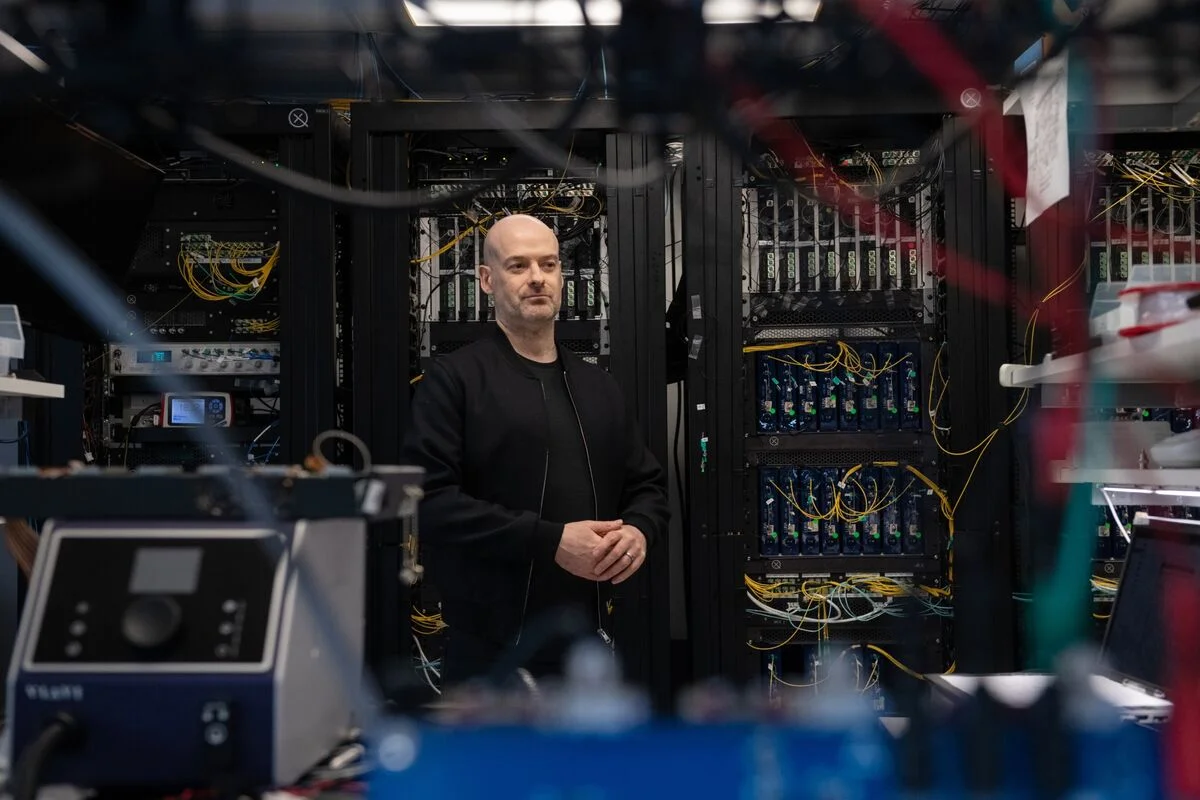
Christian Weedbrook, the founder of Canadian quantum computing startup Xanadu Quantum Technologies Ltd., became a billionaire within days of Nvidia backing the company - one of the fastest wealth-creation events in the quantum computing sector and a sign that the AI chip giant is betting its future extends well beyond classical silicon.
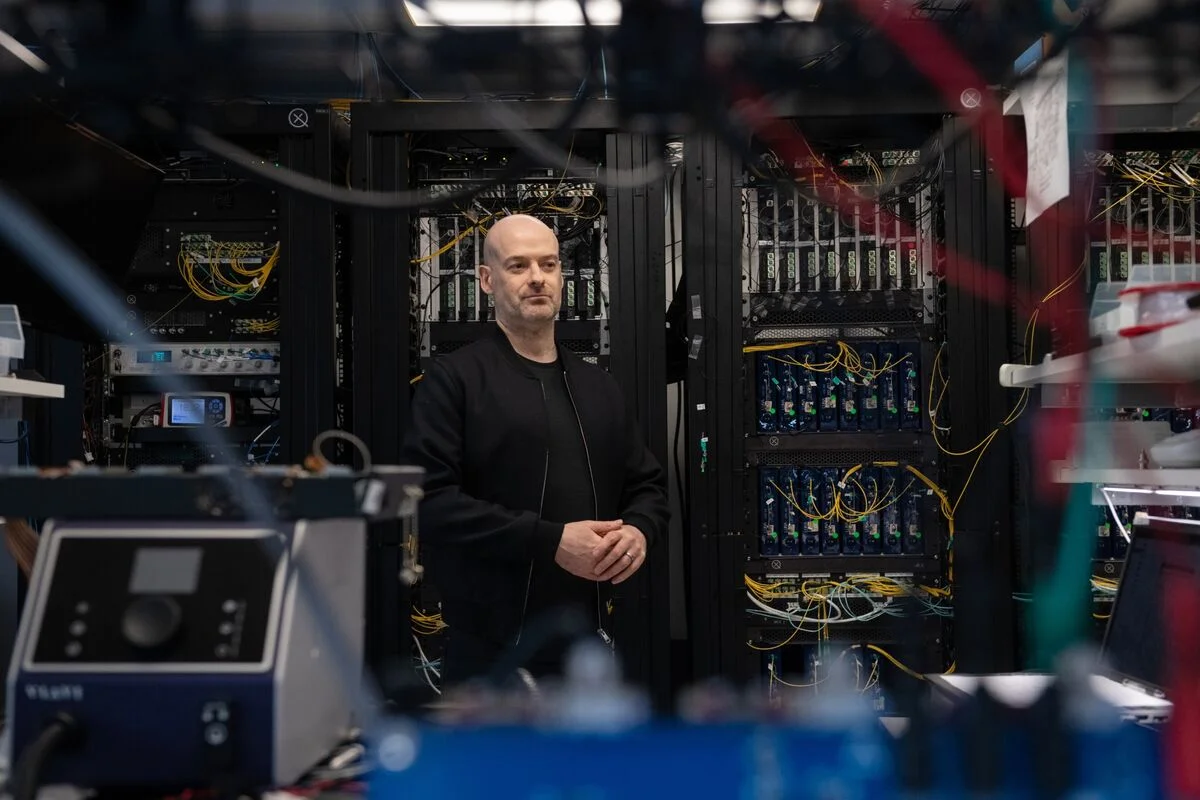
Christian Weedbrook, founder of Canadian quantum computing startup Xanadu Quantum Technologies Ltd., became a billionaire in a matter of days after Nvidia threw its weight behind the company in April 2026 - one of the most rapid wealth creation events in quantum computing history and a moment that signals the sector is moving from speculative science to strategic commercial investment.
Nvidia's Quantum Bet
Nvidia has spent the past two years quietly assembling a quantum computing strategy to complement its dominant position in AI chips. The company launched its CUDA-Q hybrid computing platform to allow developers to combine classical GPU workloads with quantum circuits, and it has been a vocal advocate for the idea that the future of computation is not purely classical or purely quantum but a hybrid of both. Backing Xanadu is the most concrete expression yet of that thesis - Nvidia is not just building tools for quantum, it is now a direct stakeholder in one of the sector's most technically ambitious companies.
Xanadu's photonic architecture is a particular fit for Nvidia's roadmap. Unlike superconducting qubits that require cooling to near absolute zero, photonic quantum computers use particles of light and can operate at room temperature - significantly reducing the infrastructure burden and making them more practical for commercial deployment at scale. The compatibility with fiber optic networks also positions Xanadu's technology for quantum networking applications, a market that could dwarf standalone quantum computation.
PennyLane: The Software Moat
Xanadu's hardware ambitions are matched by a software asset that may prove equally valuable: PennyLane, an open-source library for quantum machine learning that has become one of the most-used frameworks in the field. PennyLane allows researchers and developers to write quantum programs that run on Xanadu's own hardware as well as competing systems from IBM, Google, and IonQ - creating a cross-platform developer ecosystem analogous to what PyTorch became for classical deep learning.
That software positioning is precisely what makes Xanadu attractive to Nvidia. Nvidia's dominance in AI is built as much on CUDA - its proprietary developer platform - as on GPU hardware itself. A quantum company with its own widely-adopted developer framework offers Nvidia a template it knows well: win the developers, and the hardware sales follow. Nvidia's NVLink Fusion partnership with Marvell follows the same logic of expanding the compute ecosystem rather than just selling more chips.
Weedbrook's Billion-Dollar Week
The speed of Weedbrook's ascent to billionaire status reflects how rapidly investor sentiment around quantum has shifted in 2026. A year ago, quantum computing was widely treated as a 10-to-20-year commercial horizon. Nvidia's endorsement has compressed that timeline in the market's eyes. The same week Google and CoreWeave raised $6.7 billion in AI infrastructure bonds, Xanadu demonstrated that quantum is now attracting the same tier of strategic capital that has been pouring into classical AI infrastructure - just at an earlier stage.
Weedbrook founded Xanadu in 2016 and has led it through a decade of photonic hardware development that most of the industry dismissed as commercially premature. The Nvidia investment validates a long technical bet. It also creates a new competitive pressure on quantum incumbents: IBM's Heron processors, Google's Willow chip, and IonQ's trapped-ion systems now face a rival with the world's most powerful AI company as a commercial and strategic backer.
What This Means for AI and Quantum Convergence
The deeper significance of the Nvidia-Xanadu deal is what it says about where the AI industry sees its own limits. Current large language models and AI systems run on classical hardware - GPUs and custom accelerators - and face diminishing returns as models scale. Quantum computing offers a potential escape valve for specific problem types: optimization, drug discovery, materials science, cryptography, and financial modeling. Microsoft's own AI expansion has included quantum research through its Azure Quantum platform, and Google has maintained a quantum research program alongside its Gemini AI work.
The convergence is accelerating. Studies showing AI model limitations on probabilistic tasks have reinforced the case that classical AI alone cannot solve every problem type - quantum approaches may be the answer for the hardest optimization problems. Nvidia's investment in Xanadu positions it to be at the center of that convergence, not just a supplier to it. For the broader AI funding ecosystem - which has seen sustained venture activity across robotics, infrastructure, and now quantum - the Xanadu deal is further confirmation that the capital cycle has not peaked.
Source: Bloomberg
Frequently Asked Questions
Who is Christian Weedbrook and what is Xanadu?
Christian Weedbrook is the founder and CEO of Xanadu Quantum Technologies Ltd., a Canadian quantum computing startup headquartered in Toronto. Xanadu is building photonic quantum computers - systems that use light particles (photons) rather than electrons to perform quantum calculations. The company is also the creator of PennyLane, one of the most widely used open-source libraries for quantum machine learning, which has attracted a large developer community and positioned Xanadu as a key player in quantum software as well as hardware.
Why did Nvidia invest in Xanadu?
Nvidia has been building out a quantum computing strategy alongside its dominant AI chip business. The company launched its CUDA-Q platform to bridge classical GPU computing with quantum hardware, and Xanadu's photonic architecture is seen as a natural partner for that roadmap. Nvidia's $2 billion NVLink Fusion deal with Marvell showed the company is aggressively expanding beyond GPU sales into the broader compute stack - quantum is the next frontier in that expansion.
How does photonic quantum computing differ from other quantum approaches?
Most quantum computers - including those from IBM and Google - use superconducting qubits that must be cooled to near absolute zero temperatures. Xanadu's photonic approach uses particles of light and can operate at room temperature, which dramatically reduces infrastructure requirements. Photonic systems are also considered more compatible with existing fiber optic networks, making them a strong candidate for quantum networking and communication applications alongside raw computation.
How does Nvidia's quantum bet fit into the broader AI investment landscape?
Nvidia's move into quantum mirrors a broader pattern of AI infrastructure companies expanding their bets into next-generation computing. Google and CoreWeave raised $6.7 billion in bonds just days earlier to fund AI data center expansion, while AI robotics startups have continued to attract record venture funding. Quantum computing is increasingly viewed not as a replacement for AI but as a complementary technology that could solve optimization problems currently intractable for classical AI systems.
What does the Xanadu deal mean for the quantum computing sector?
Nvidia's backing of Xanadu sends a clear signal that the quantum sector is graduating from pure research to commercial investment. When the world's most valuable semiconductor company stakes its reputation on a quantum startup, it validates the technology in the eyes of institutional investors and large enterprises. It also accelerates the timeline pressure on competitors - IBM, Google, IonQ, and Rigetti now face a well-funded rival with Nvidia's distribution reach and developer ecosystem behind it. For the quantum software community, Xanadu's PennyLane library may become the PyTorch of quantum computing.
The Bottom Line
Continue reading related coverage in News or browse the latest articles.