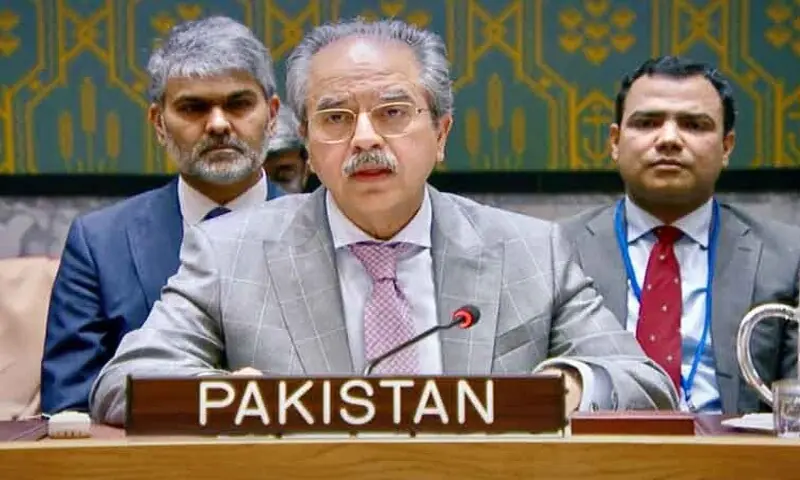
Pakistan chaired a panel at the United Nations where security and technology experts warned that terrorist organizations are increasingly exploiting AI and cryptocurrency. Pakistan's envoy called for urgent multilateral action on social media governance gaps.
Pakistan chaired a panel at the United Nations this week where security and technology experts warned that terrorist organizations are increasingly exploiting artificial intelligence and cryptocurrency to evade detection, plan operations, and move funds beyond traditional financial oversight. Pakistan's envoy to the UN used the occasion to call for urgent international action on social media governance — a channel that remains central to extremist recruitment and propaganda distribution across borders.
Why AI and Crypto Appeal to Terror Groups
The appeal of AI tools and cryptocurrency to terrorist organizations mirrors their broader commercial appeal: both are accessible, scalable, and designed to function without centralized gatekeeping. AI systems capable of cybersecurity applications can equally generate automated propaganda, assist with target research, and enable convincing impersonation at costs far below traditional human-operated methods. Cryptocurrency networks, as documented by international anti-money laundering bodies, provide value transfer mechanisms with pseudonymity that conventional banking cannot easily match. Experts at the panel warned that the convergence of these two capabilities creates a compounding threat that existing legal frameworks were not designed to address.
Pakistan's Case for Multilateral Action
Pakistan organized the UN panel as part of its sustained engagement in international counterterrorism bodies, where it has argued consistently that technology regulation requires coordinated multilateral action rather than fragmented national approaches. Pakistan's position reflects the reality of a country navigating complex regional security dynamics where extremist financing and recruitment operate through digital channels that cross multiple jurisdictions simultaneously. By bringing AI and cryptocurrency exploitation explicitly into a UN forum, Pakistan is pushing the international community to treat emerging technology governance as a core security matter — not merely a commercial regulatory question.
The Social Media Regulation Gap
Pakistan's envoy also singled out social media platforms as a parallel challenge that remains structurally unresolved. Platforms operating under U.S. or European jurisdiction face limited accountability in countries where terrorist content directly incites violence. Material flagged by domestic authorities for removal often persists through algorithmic amplification or inadequate cross-border content moderation enforcement. The envoy's remarks positioned social media governance — already contested in global regulatory discussions — as inseparable from the AI and crypto security challenge that the panel convened to address.
Why This Panel Matters for Global AI Governance
Pakistan's hosting of this session signals that AI-enabled security threats are now a formal multilateral concern with UN-level visibility at a pivotal moment. AI governance frameworks are under active international negotiation, and inserting counterterrorism concerns into those discussions could shape access controls for powerful AI tools, strengthen crypto anti-money laundering obligations, and define accountability standards for platforms operating across jurisdictions. Findings from the panel are expected to inform UN Security Council counterterrorism committees and feed into ongoing negotiations at the UN AI Advisory Body.
- Pakistan organized a UN panel where experts warned terror groups are exploiting AI and cryptocurrency to evade financial and operational oversight.
- AI enables scalable propaganda and planning; crypto enables pseudonymous cross-border financing beyond traditional banking controls.
- Pakistan's envoy flagged social media governance gaps that allow extremist content to persist despite domestic removal requests.
- The panel reflects growing multilateral urgency to embed counterterrorism concerns into active AI and crypto regulatory frameworks.
- Findings are expected to influence UN Security Council committees and international AI governance negotiations underway in 2026.
Source: Dawn
Frequently Asked Questions
How are terror groups exploiting AI and cryptocurrency?
Experts at the UN panel warned that terrorist organizations use AI tools for automated propaganda generation, target research, and operational planning, while cryptocurrency networks enable cross-border fund transfers with pseudonymity that bypasses traditional banking and financial oversight systems.
Why did Pakistan organize this UN panel on AI and crypto?
Pakistan organized the panel through its UN counterterrorism engagement, arguing that technology regulation requires multilateral coordination. Pakistan's position reflects its experience bordering active conflict zones where extremist financing and recruitment operate through digital channels across multiple jurisdictions.
What social media governance gaps did Pakistan's envoy highlight?
Pakistan's UN envoy pointed out that platforms operating under U.S. or European jurisdiction face limited accountability in countries where extremist content causes direct harm. Terrorist material flagged for removal by domestic authorities often persists due to inadequate international content moderation obligations.
What impact could this UN panel have on AI governance frameworks?
The panel's findings are expected to feed into UN Security Council counterterrorism committees. By inserting security concerns about terrorist exploitation into active AI governance negotiations, Pakistan aims to influence access controls, KYC requirements for AI tools, and international crypto anti-money laundering obligations.
The Bottom Line
Pakistan's UN panel on AI and crypto terrorism brings multilateral urgency to a challenge that has so far been addressed mainly through disconnected national laws. As AI tools become more capable and crypto networks more liquid, international coordination on preventing terrorist exploitation is becoming a prerequisite for effective counterterrorism policy in the digital age.
Continue reading related coverage in News or browse the latest articles.