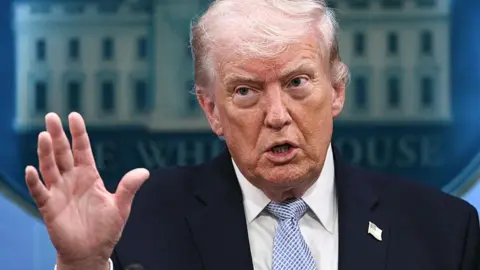
President Donald Trump ordered the US Navy to immediately blockade the Strait of Hormuz on April 12, 2026 - hours after 21-hour direct negotiations between the United States and Iran in Islamabad, Pakistan collapsed without an agreement or a clear path forward.
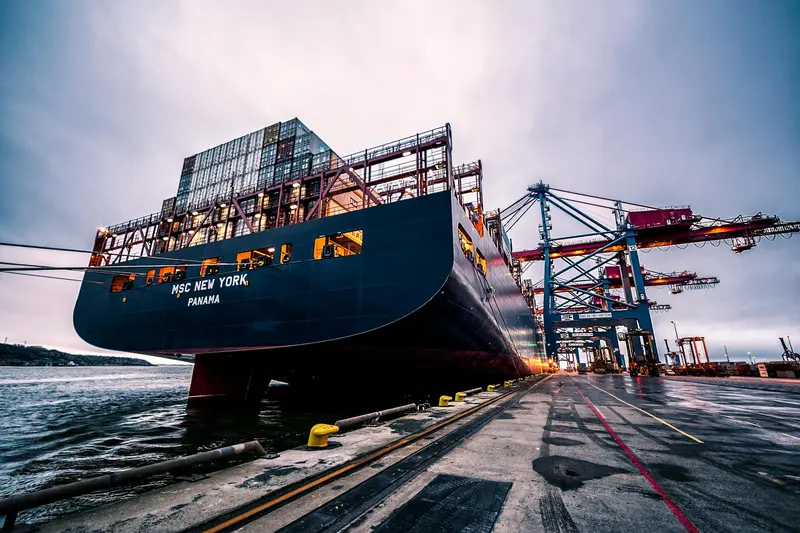
President Donald Trump ordered the US Navy to immediately blockade the Strait of Hormuz on April 12, 2026 - the same day that 21-hour direct US-Iran peace talks in Islamabad, Pakistan ended without an agreement, a signed deal, or any confirmed path to resuming negotiations. It was the highest-level direct engagement between the two countries since Iran's 1979 Islamic Revolution, and it ended with both delegations leaving the Pakistani capital separately.
Trump's Blockade Order
In his first public statement after the Islamabad talks concluded, Trump posted on Truth Social that US forces would "begin the process of BLOCKADING any and all Ships trying to enter, or leave, the Strait of Hormuz." He framed the blockade as a pressure mechanism rather than a permanent closure, writing: "At some point, we will reach an 'ALL BEING ALLOWED TO GO IN, ALL BEING ALLOWED TO GO OUT' basis, but Iran has not allowed that to happen."
Trump went further, directing the Navy to target vessels that have been paying transit fees to Iran: "I have also instructed our Navy to seek and interdict every vessel in International Waters that has paid a toll to Iran. No one who pays an illegal toll will have safe passage on the high seas." He told Fox News the goal was ensuring all ships can transit and described the posture as "all or none." Other nations would be involved in the blockade, he said, without naming them.
During the Islamabad talks, the US military said two destroyers had transited the strait ahead of mine-clearing work - a first since the war began on February 28. Iran denied that transit took place.
What Broke Down in Islamabad
The US red lines at Islamabad were non-negotiable from Washington's perspective. According to a US official who spoke on condition of anonymity, those conditions included: Iran never obtaining a nuclear weapon, ending all uranium enrichment, dismantling major enrichment facilities, allowing retrieval of highly enriched uranium stockpiles, formally opening the Strait of Hormuz to all shipping, and ending its financial and material support for Hamas, Hezbollah, and Houthi rebels.
Iranian negotiators said they could not agree to all of those requirements. An Iranian diplomatic official, speaking on condition of anonymity given the sensitivity of closed-door discussions, denied the talks failed over Iran's nuclear ambitions specifically: "Iran is not seeking to acquire nuclear weapons, but it has the right to nuclear energy for peaceful purposes." Parliament Speaker Mohammad Bagher Qalibaf, who led the Iranian delegation, said it was time for the United States "to decide whether it can gain our trust or not." On his return to Tehran he addressed Trump directly in a written statement: "If you fight, we will fight."
Vice President JD Vance, who led the US delegation, summarised the American position before leaving Islamabad: "We need to see an affirmative commitment that they will not seek a nuclear weapon."
IRGC: Military Vessels Will Be Treated as a Ceasefire Breach
Iran's Islamic Revolutionary Guard Corps responded to Trump's blockade announcement within hours. Two semi-official Iranian news agencies reported that the IRGC said the strait remained under Iran's "full control" and was open to non-military vessels. However, the IRGC stated that any military vessels approaching the strait would receive a "forceful response" - and would be considered a breach of the existing ceasefire.
That framing puts the US Navy in an immediate bind. The April 8 ceasefire is set to expire on April 22, and neither side indicated at Islamabad what happens when that clock runs out. If the US Navy attempts to enforce the blockade with warships transiting into the strait, Iran has now publicly framed that as a ceasefire violation - providing itself political and military cover for a response.
Oil Markets and the Stakes for Global Energy
The Strait of Hormuz was responsible for approximately 20% of global oil shipping before the conflict erupted on February 28. Hundreds of vessels have been stranded or navigating with extreme caution since then. A formal US naval blockade - rather than the informal commercial freeze already in place - represents a further escalation that could keep the strait closed well past the ceasefire expiry.
US gas prices already crossed $4 per gallon on the back of Hormuz supply disruption, draining an estimated $400 million per day from consumer spending. Brent crude spiked above $102 per barrel in March. March CPI printed at 0.9% month-over-month with energy as the primary driver. Every additional day the blockade extends keeps those pressures elevated and delays the re-insurance of commercial shipping that is the practical prerequisite for oil flows to resume.
International Reactions
Pakistani Foreign Minister Ishaq Dar said Pakistan will attempt to facilitate a new round of dialogue in the coming days. Iran indicated it remained open to continuing talks, per Iran's state-run IRNA news agency. The European Union issued a statement urging further diplomatic efforts. Oman, whose coastline sits on the Strait of Hormuz's southern shore, called on all parties to "make painful concessions." The Kremlin said Russian President Vladimir Putin "emphasized his readiness" to help bring about a diplomatic settlement in a call with Iran's president.
On the Israel-Lebanon front, which complicated the Islamabad negotiations markedly - Iran's 10-point proposal included a halt to Israeli strikes on Hezbollah in Lebanon - Israeli Prime Minister Benjamin Netanyahu visited parts of southern Lebanon under Israeli control on Sunday for the first time since the current fighting began. Negotiations between Israel and Lebanon are expected to begin Tuesday in Washington, though Lebanon's disarmament of Hezbollah remains a core Israeli demand that the militant group has resisted for decades. Lebanon's National News Agency reported six people killed Sunday in southern Lebanon.
Timeline: What Comes Next
The ceasefire between US and Iranian forces is set to expire on or around April 22. With no new talks scheduled, no signed agreement, and the US Navy now moving toward a formal blockade posture, the next ten days represent a critical pressure point. Pakistan has volunteered to host further dialogue. Iran says it is willing to continue. Whether any of those diplomatic signals produce a new negotiating framework before the ceasefire clock runs out - and before the US Navy's blockade order translates into active interdictions - will determine whether the conflict re-escalates or finds a negotiated off-ramp.
For global financial markets already absorbing the shock of six weeks of Middle East disruption, the answer matters enormously.
Source: PBS NewsHour / Associated Press · Dawn · CBS News

Frequently Asked Questions
What did Trump order regarding the Strait of Hormuz?
President Trump announced on April 12, 2026 that the US Navy would "immediately" begin blockading all ships entering or leaving the Strait of Hormuz. In a Truth Social post, he said he had "instructed our Navy to seek and interdict every vessel in International Waters that has paid a toll to Iran," adding that "no one who pays an illegal toll will have safe passage on the high seas." He said the goal was ultimately to achieve free transit for all vessels - "all or none" - but blamed Iran for preventing that outcome.
Why did the Islamabad peace talks collapse?
The 21-hour talks broke down over US demands that Iran could not fully accept. US red lines included: Iran never obtaining a nuclear weapon, ending all uranium enrichment, dismantling major enrichment facilities, allowing retrieval of highly enriched uranium stockpiles, opening the Strait of Hormuz, and ending funding for Hamas, Hezbollah, and Houthi rebels. Iranian negotiators said the talks fell apart over two or three key points, blaming what they called US "overreach." The collapse leaves the ceasefire terms unresolved with the truce set to expire April 22.
How did Iran respond to the US Navy blockade order?
Iran's Islamic Revolutionary Guard Corps (IRGC) issued a statement saying the Strait of Hormuz remained under Iran's "full control" and was open for non-military vessels. The IRGC added that any military vessels approaching the strait would receive a "forceful response" and would be treated as a ceasefire breach. Iran's Parliament Speaker Mohammad Bagher Qalibaf, who led the Iranian negotiating team in Islamabad, addressed Trump directly: "If you fight, we will fight."
What are the implications for oil prices and energy markets?
The Strait of Hormuz handles approximately 20% of the world's daily oil supply. That flow has already been severely disrupted since the war began on February 28, 2026. A formal US Navy blockade escalates the maritime standoff further and threatens to extend the supply disruption that already pushed US gas prices past $4 per gallon and drove March CPI to a 0.9% monthly gain. Energy traders and shipping insurers are watching whether the blockade order translates into active interdictions.
What happens now that the ceasefire talks have failed?
The April 22 ceasefire expiry looms with no new talks scheduled. Pakistani Foreign Minister Ishaq Dar said Pakistan will try to facilitate a new round of dialogue in coming days. Iran said it remained open to continuing talks. The European Union called for further diplomatic efforts, and Oman's foreign minister urged "painful concessions" from both sides. Russian President Putin also signalled readiness to help broker a settlement. Whether any of these avenues produces a new negotiating window before the ceasefire expires is the central question of the coming week.
The Bottom Line
Continue reading related coverage in News or browse all stories on the articles page.